In questo articolo
La gestione dei salari al netto consiste nel registrare in contabilità esclusivamente gli importi effettivamente corrisposti ai dipendenti. È un metodo semplice e pratico, particolarmente indicato quando l'elaborazione delle paghe viene effettuata con un software dedicato o affidata a uno studio fiduciario.
Rispetto alla contabilizzazione al lordo, offre una visione meno dettagliata dei costi del personale, poiché non distingue separatamente i contributi sociali a carico del datore di lavoro da quelli trattenuti ai dipendenti.
Per questo motivo, il calcolo dei salari lordi, delle trattenute e dei contributi sociali viene effettuato dal programma di gestione delle paghe o affidato ad una fiduciaria che ne invia le dichiarazioni ai corrispondenti enti. La dichiarazione annuale alla Cassa AVS si basa infatti sulla massa salariale lorda, che deve essere determinata a partire dai conteggi salariali.
Cosa viene registrato
Con la gestione al netto, in contabilità si registrano normalmente:
- i salari netti corrisposti ai dipendenti
- gli acconti dei contributi sociali (AVS/AI/IPG/AD), versati mensilmente o trimestralmente
- i premi assicurativi e previdenziali, versati a inizio anno o con cadenza semestrale.
- gli eventuali conguagli di fine anno.
Cosa non viene registrato:
- Il salario lordo
- Le trattenute del dipendente
- I debiti verso enti sociali a fine periodo.
Vantaggi della gestione al netto
- Registrazioni semplici
- Pochi conti da gestire
- Contabilità più veloce.
Limiti della gestione al netto
- Il salario lordo non appare in contabilità
- Non si vede il dettaglio delle trattenute salariali dei dipendenti
- Non si distinguono i contributi del dipendente e del datore di lavoro.
Quando utilizzare la gestione dei salari al netto
La registrazione dei salari al netto è consigliata quando la gestione delle paghe viene effettuata con un programma salari o da una fiduciaria e la contabilità ha lo scopo principale di registrare i pagamenti e gli adempimenti contabili.
È particolarmente adatta quando:
- il dettaglio dei salari, delle trattenute e dei contributi sociali è gestito al di fuori della contabilità
- non è necessario analizzare separatamente i costi del personale in contabilità
- si desidera mantenere la contabilità più semplice e con un numero ridotto di registrazioni.
Conti normalmente utilizzati
Per gestire i salari al netto sono normalmente sufficienti pochi conti.
Conti di costo
- 5000 Salari
- 5700 Contributi AVS/AI/IPG/AD
- 5710 Contributi cassa assegni familiari
- 5720 Contributi previdenza professionale obbligatoria
- 5730 Premi per l'assicurazione infortuni professionale
- 5740 Assicurazione indennità giornaliera per malattia
- 5790 Imposta alla fonte
Conti di pagamento
- 1020 Banca
- Altro conto della Liquidità.
Distinzione tra quota del datore di lavoro e quota del dipendente
Nella gestione dei salari al netto, la contabilità non evidenzia direttamente la ripartizione dei contributi sociali tra la quota a carico del datore di lavoro e quella trattenuta al dipendente.
I versamenti effettuati agli enti sociali (AVS, LPP, assicurazioni e altri istituti) comprendono generalmente entrambe le quote e sono registrati come importi complessivi. Di conseguenza, dalle sole registrazioni contabili non è possibile identificare immediatamente la parte a carico del datore di lavoro.
Per determinarla è necessario fare riferimento:
- ai conti di costo dedicati ai contributi sociali
- ai conteggi elaborati dal programma di gestione delle paghe.
La contabilità rileva correttamente il costo complessivo del personale, mentre il dettaglio della ripartizione dei contributi è demandato ai conteggi salariali.
Pagamento dei salari al netto
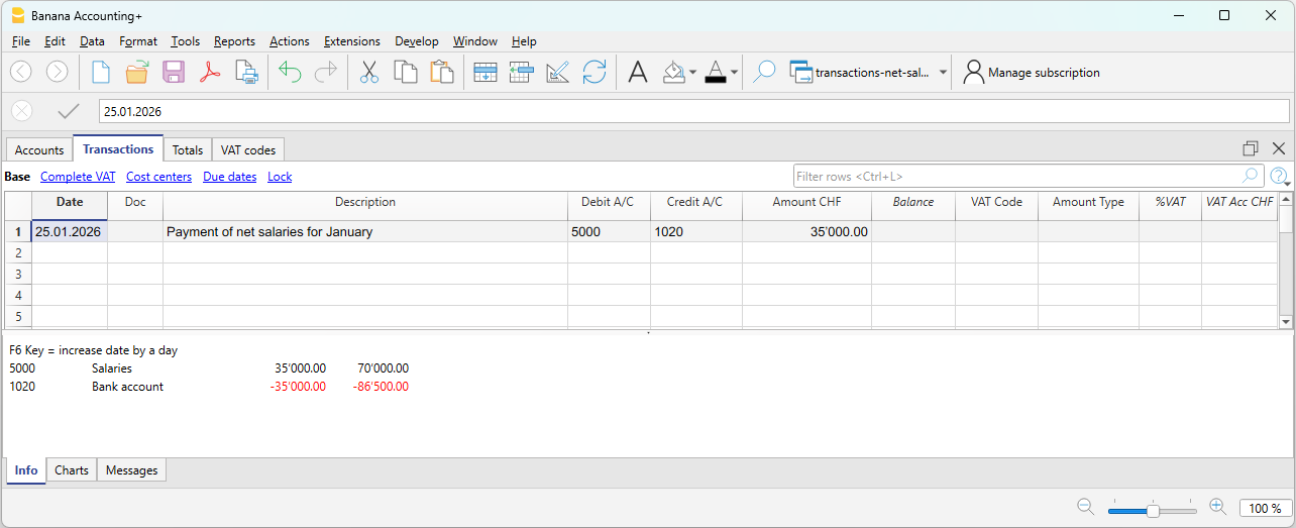
Quando si paga il salario al dipendente, si registra il salario netto pagato.
Nella tabella Registrazioni si registrano mensilmente:
- Data: la data del pagamento del salario
- Descrizione: la descrizione del pagamento
- Dare: il conto 5000 Salari
- Avere: il conto Banca
Pagamento periodico dei contributi sociali
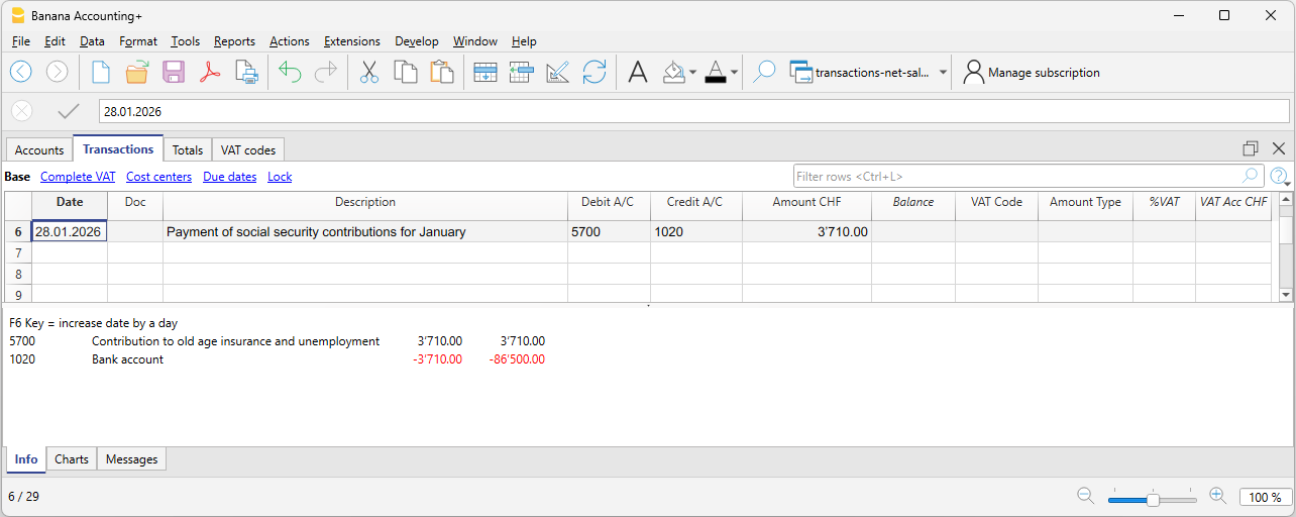
Quando si pagano gli acconti dei contributi sociali registriamo:
- Data: la data del pagamento dei contributi sociali
- Descrizione: la descrizione del pagamento
- Dare: il conto 5700 Contributi AVS/AI/IPG/AD
- Avere: il conto Banca
- Importo: inserire l'importo dei contributi sociali (indicato nella fattura di acconto) che comprende sia la quota a carico del datore di lavoro sia quella a carico dei dipendenti,
Pagamento annuale dei premi assicurativi
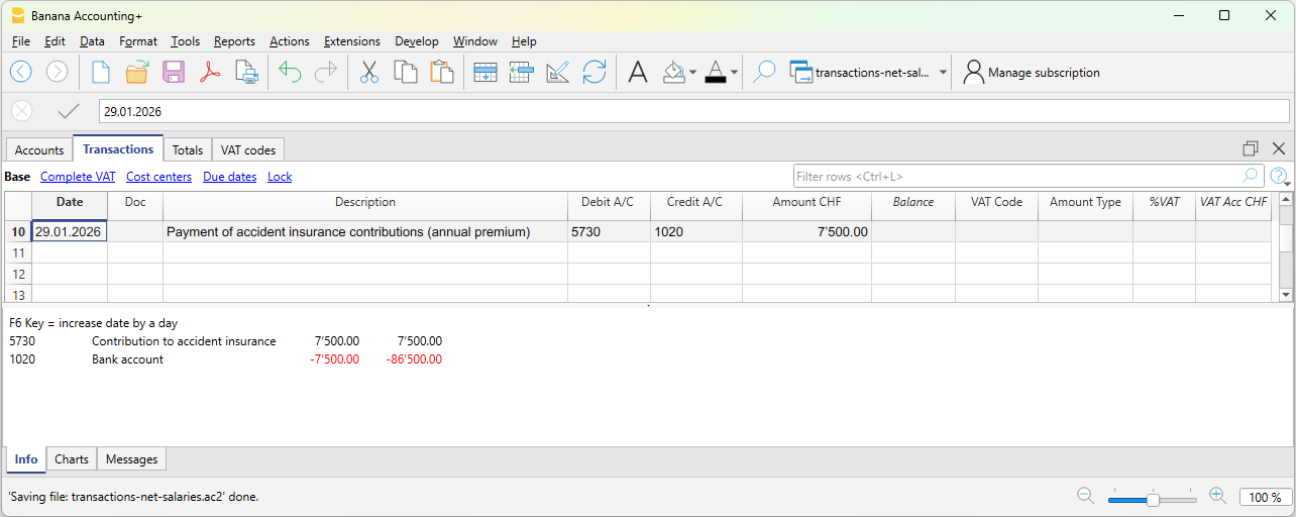
Quando si pagano i contributi assicurativi, per esempio LAINF o LAINF complementare, si registra il pagamento verso l'ente assicurativo.
- Data: la data del pagamento annuale dei premi assicurativi
- Descrizione: la descrizione del pagamento
- Dare: il conto 5730 Premi per l'assicurazione infortuni professionali
- Avere: il conto Banca
- Importo: si inserisce l'importo indicato nella fattura. Comprende sia la quota del datore di lavoro sia quella a carico del dipendente.
Pagamento del premio annuale della cassa pensione
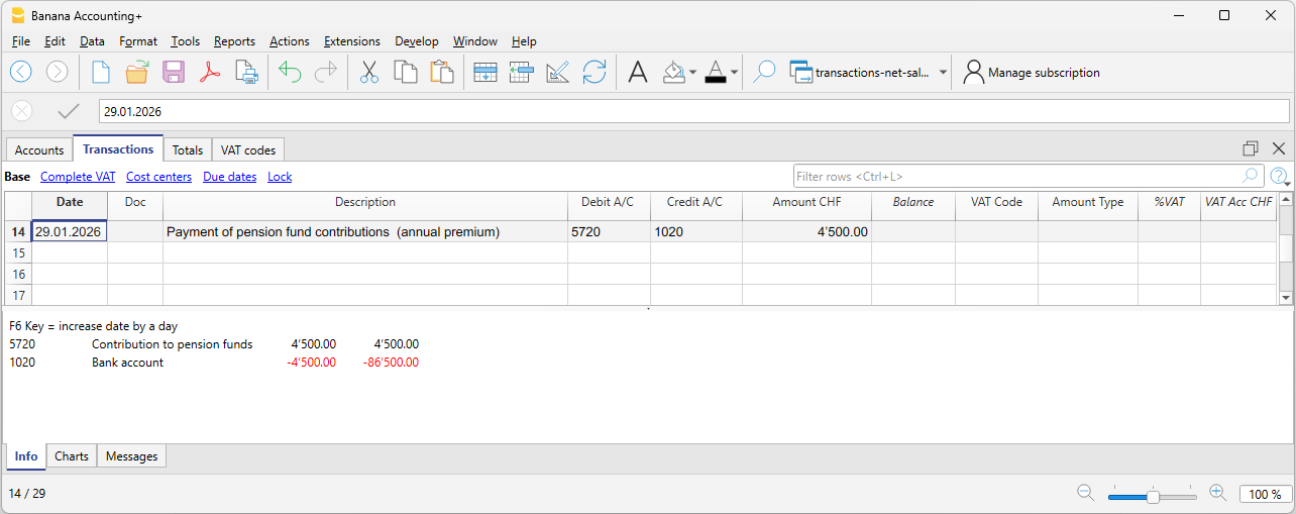
Quando si paga il premio annuale per la cassa pensione LPP:
- Data: la data del pagamento del premio annuale della cassa pensione
- Descrizione: la descrizione del pagamento
- Dare: il conto 5720 Contributi previdenza professionale obbligatoria
- Avere: il conto Banca
- Importo: si inserisce l'importo indicato nella fattura. Comprende sia la quota del datore di lavoro sia quella a carico del dipendente.
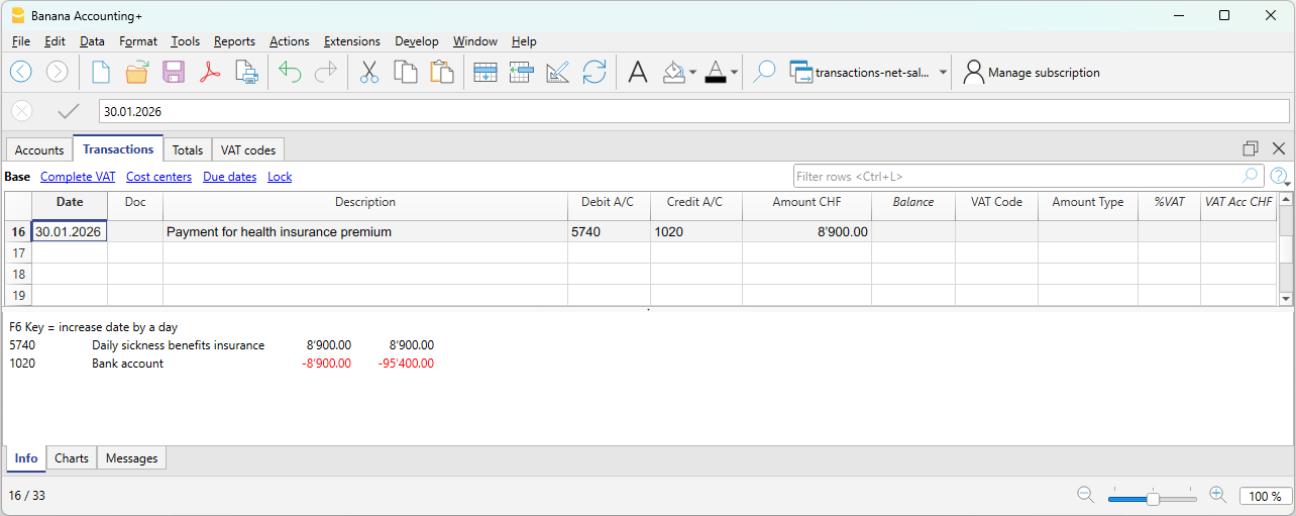
Pagamento del premio assicurazione malattia
Quando si paga il premio annuale per l'assicurazione malattia:
- Data: la data del pagamento del premio assicurazione malattia
- Descrizione: la descrizione del pagamento
- Dare: il conto 5740 Assicurazione indennità giornaliera per malattia
- Avere: il conto Banca
- Importo: si inserisce l'importo indicato nella fattura. Comprende sia la quota del datore di lavoro sia quella a carico del dipendente.
Rimborso spese incluso nei salari netti pagati
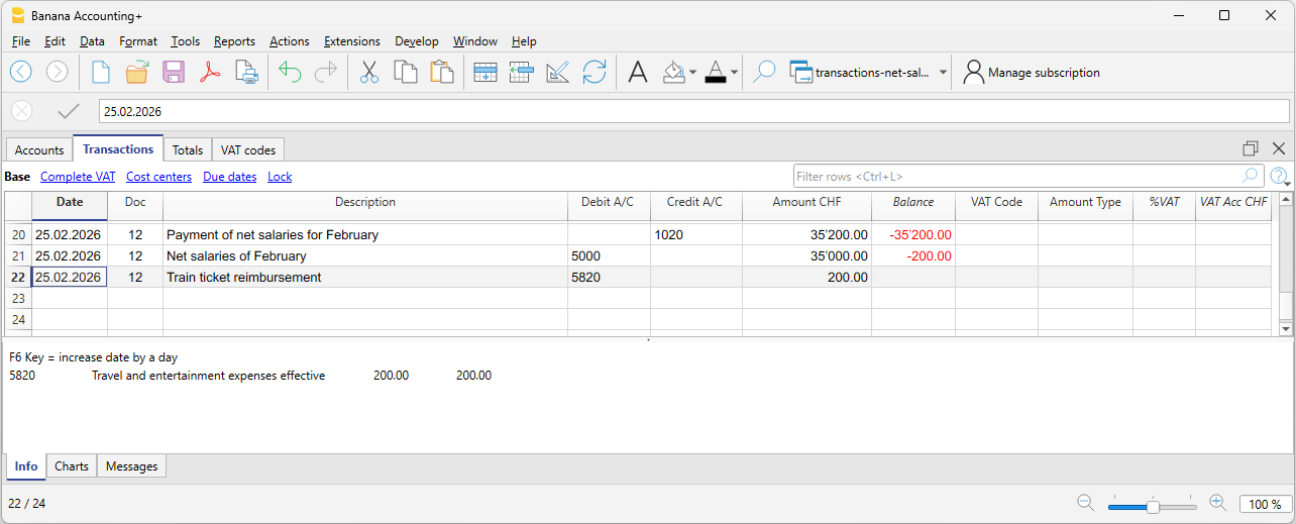
Quando nel salario netto pagato è incluso un rimborso spese, è consigliabile separare contabilmente il salario netto dal rimborso. In questo modo il conto salari non viene alterato da importi che non rappresentano effettivamente il salario.
Esempio:
- Salario netto: CHF 4'000
- Rimborso spese: CHF 200
- Pagamento totale con banca: CHF 4'200
Nella registrazione si devono separare i due importi, pertanto va registrata su tre righe:
Nella tabella Registrazioni:
- Prima riga - pagamento totale con banca
- Data: la data della registrazione
- Descrizione: pagamento salario mensile
- Dare: deve rimanere vuota
- Avere: il conto Banca
- Importo: l'importo totale pagato CHF 4'200
- Seconda riga - salario netto mensile
- Data: data della registrazione
- Descrizione: pagamento salario mensile
- Dare: il conto 5000 Salari
- Avere; deve rimanere vuota
- Importo: l'importo del salario netto pagato CHF 4'000
- Terza riga - rimborso spese
- Data: la data della registrazione
- Descrizione: rimborso spese
- Dare: il conto Rimborso spese (es. spese di viaggio)
- Avere: deve rimanere vuota
- Importo: l'importo del rimborso spese CHF 200
Pagamento delle Imposte alla Fonte
Quando si pagano a fine trimestre le imposte alla fonte:
- Data: la data del pagamento delle imposte alla fonte
- Descrizione: la descrizione del pagamento
- Dare: il conto 5790 Imposta alla fonte
- Avere: il conto Banca
- Importo: inserire l'importo calcolato dal gestionale salari, in base alle impostazioni previste dall'Ufficio Imposte alla Fonte.

Controllo e verifica
Durante l'anno i contributi sociali e alcuni premi assicurativi vengono generalmente versati sotto forma di acconti. Solo con i conteggi definitivi o con i conguagli di fine anno viene determinato l'importo effettivamente dovuto.
Per questo motivo, nella gestione degli stipendi al netto è fondamentale eseguire controlli periodici e una verifica accurata alla chiusura dell'esercizio.
Per maggiori informazioni consulta la pagina Riconciliazione dei salari al netto.